Destro came out of stealth, stating that it had developed an artificial intelligence layer that manages logistics operations instead of robots, and raised $8 million in seed funding. The company’s founder, Manthan Pawar, has approximately eight years of experience in the US supply chain and robotics sectors; he expects Destro to become cash-flow positive by the end of the year.
The company focused on the cross-docking process at one of Japanese transportation company Yusen Logistics’ approximately 30 facilities in the US, which involves directing products unloaded from trucks to different vehicles. Yusen’s director of automation, Richard Brunelle, asked Destro to adapt the system it had initially developed for picking and pack processes to this operation. Destro modified its solution for this use case.
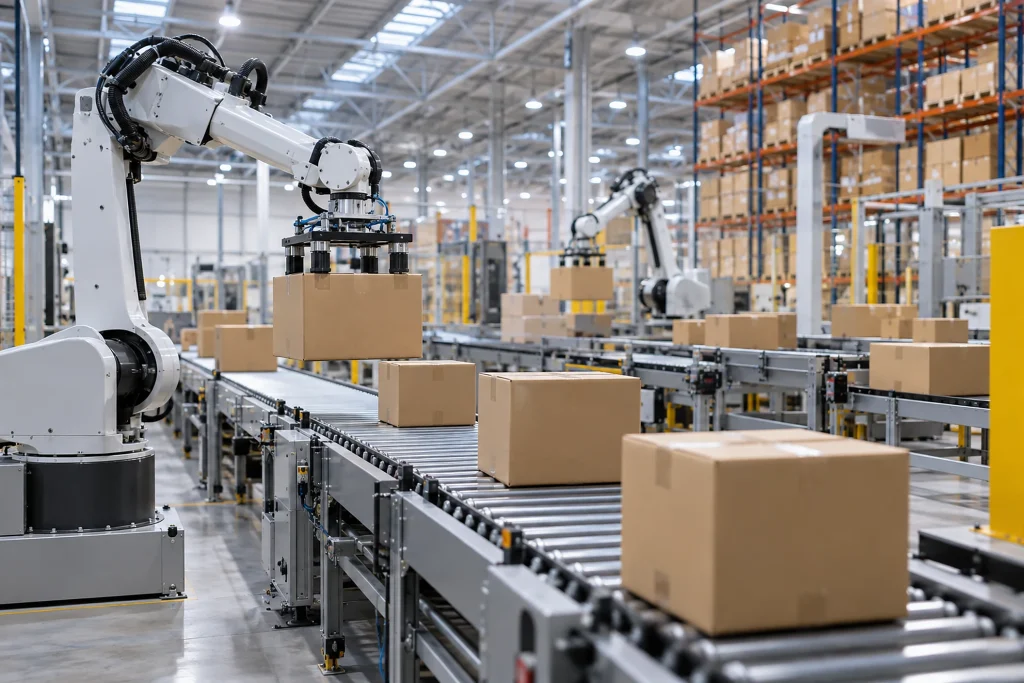
The first pilot was conducted at a Yusen facility in the Pacific Northwest. Three robots manufactured by Miva Robotics operated with Destro’s Vision operating system, which is based on open-weight vision-language-action models. While human workers placed products in different carts, the robots located full carts and transported them to their destinations. It was reported that the operation became more systematic and less labor-intensive thanks to the Mothership operating system, which manages people, carts, and trucks.
Yusen had also held talks with two major robotics companies in the same area, but those companies’ solutions could not adapt to the existing workflow. One of them could only move carts from point to point, while the other offered fleet management but required an employee for all coordination. Destro was chosen because it could direct the entire process autonomously.
Destro is expanding the first pilot to full deployment with 26 robots and launching a new pilot with 17 robots at Yusen’s Southern California facility. Pawar aims to scale this workflow to thousands of warehouses where similar operations are carried out. Base10 Partners and Bonfire Ventures led the funding round, while CoFound Partners also invested.
The company is said to face challenges in processes requiring greater dexterity and physical manipulation. While general-purpose robot bodies and open-source models are reportedly not yet sufficient for these tasks, Pawar argues that the software layer Destro has built around robots and models is where the real value lies. Brunelle of Yusen, meanwhile, said he had not yet found a suitable use case for humanoid robots, but was evaluating a potential pilot with a wheeled humanoid robot. Destro will be showcased at TechCrunch Disrupt, to be held in San Francisco on October 13-15.
Why it matters
Destro’s approach highlights the role of software that coordinates people, vehicles, and machines within the same workflow, rather than simply increasing the number of robots in warehouse automation. For logistics companies seeking to add automation without overhauling their existing operations, this represents an alternative model to systems designed for a single task or requiring constant human supervision. However, the value of this model depends on the extent to which it can be transferred to tasks requiring greater physical dexterity than processes focused primarily on routing and transport; the limitations of open-weight models and general-purpose robot bodies are decisive here. As applications expand to different facilities, it will become clear whether the same level of coordination can be maintained across changing layouts and workflows, while the lack of a clearly defined use case for humanoid robots leaves an open question about the direction of automation.