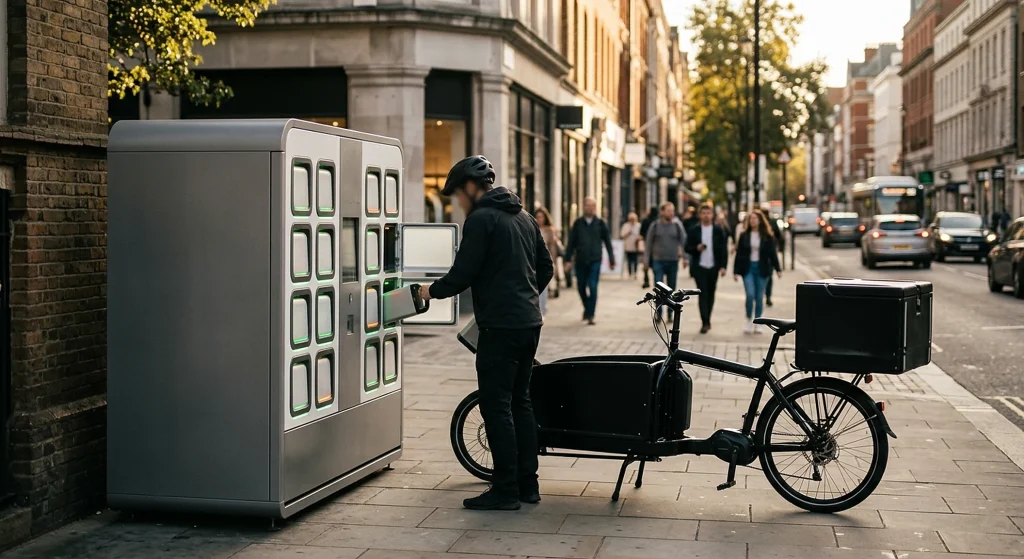
In New York, large-scale battery installations are advancing slowly due to complex regulations and concerns over rare but attention-grabbing battery fires. Some startups are instead using small batteries in unexpected places.
PopWheels has built a battery-swapping system for e-bike couriers. Co-founder David Hammer said at a New York Climate Week event on September 24 that there are roughly 50 cabinets in the city and 2,500 batteries in circulation. According to Hammer, the biggest problem with large-scale storage is that the benefits are abstract while the costs are concrete. The company recently began supplying batteries to street food carts as well; four batteries provide about five kilowatt-hours of electricity, which covers the daily needs of many carts and replaces gasoline generators.
Copper, meanwhile, manufactures induction stoves with integrated batteries. Co-founder and CEO Sam Calisch noted that the batteries make it possible to cook during power outages and avoid costly electrical upgrades.
Every Electric and David Energy sell plug-in batteries for homes and businesses. Every’s battery connects to air conditioners; the company pays customers who reduce usage during peak periods. David Energy focuses on laundromats, parking lots, and gyms.
These small batteries do not require grid upgrades or extensive permits. David Energy CEO James McGinniss called this “the biggest development in the electricity grid in the last 20 years.” Calisch said that if every stove in the US were sold with a battery, tens of gigawatts of capacity would be created.
Term: grid
The electricity grid is the transmission and distribution network that connects generation facilities to consumers; supply and demand must be balanced instantaneously.