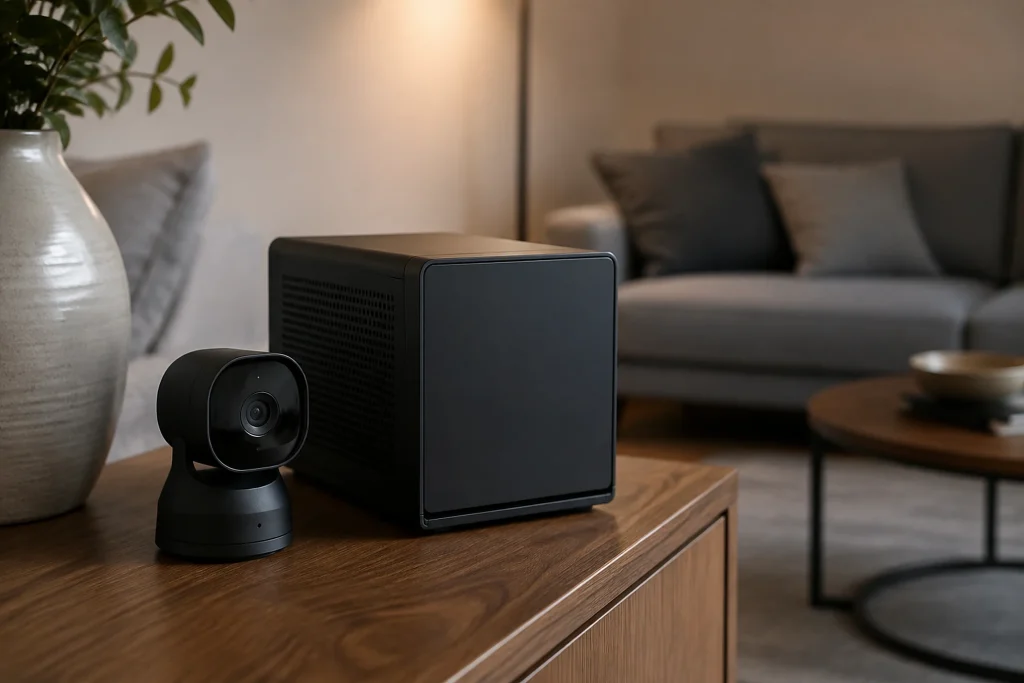
Ugreen introduced the HomeAgent platform at IFA 2026, combining smart home control, security camera recording, local storage and on-device artificial intelligence in a single system. The system is managed by a voice assistant called Uliya, which can be given commands in natural language. The company aims to process data without it leaving the home and eliminate monthly subscription fees.
HomeAgent hubs can process and store camera footage locally; they also offer NAS functionality for personal files such as music, films and photos. AI features include cross-camera tracking, alerts for people, vehicles, pets and packages, live status queries such as “where is my pet now?”, AI-powered searches within videos and text-based descriptions of events. However, an internet connection is required for instant notifications and remote access to security cameras. The option to use Uliya via the cloud is also available.
The three hub models offer different levels of processing power. The HomeAgent HA100 runs basic rule-based automations with specific voice commands. The HA100 Pro adds semantic and context-aware understanding. The MasterAgent MA100, powered by the Nvidia Jetson Thor T5000 platform, offers the highest level of local processing power. The products will go on sale on Kickstarter in October; early-access prices were announced as $899 for the HA100, $2999 for the HA100 Pro and $9999 for the MA100. Ugreen says prices could approximately double after the Kickstarter campaign.
HomeAgent, as a Matter controller, will support third-party devices that use Wi-Fi, Zigbee, Thread, Bluetooth, NFC, ONVIF/RTSP and PoE. At the initial stage, lights, switches, sensors and blinds are supported. The compatibility list includes products from Aqara, ThirdReality, SwitchBot and Eve; the company recommends using devices it has approved.
Ugreen also introduced a smart speaker for Uliya, the SynCare Indoor Cam ID500 Pro, the SynCare POE Cam OD600 Pro and the battery-powered SynCare Cam OD800 Pro security cameras. The digital photo frame, which uses E Ink Spectra, can display photos stored on the hub without sending them to the cloud.
Why it matters
HomeAgent’s key distinction is that it seeks to bring smart home management, camera recordings, personal files and AI processing together on a single in-home infrastructure rather than handling them as separate services. This approach directly concerns users who do not want their data sent to the cloud and want to avoid paying ongoing subscription fees; however, the requirement for an internet connection for remote access and notifications shows that the local processing model does not cover every use case. Support for Matter and different connectivity standards could make it easier to retain existing devices, but Ugreen’s recommendation to use products it has approved creates a selective framework for compatibility, indicating that not every smart home setup may work smoothly. The open question is whether the difference in processing power among the three models will justify their price ranges for users.
Background
NAS is not a new name in the FikirPilot archive: we published a news report mentioning this name in the last 90 days; that article was dated August 26, 2026.