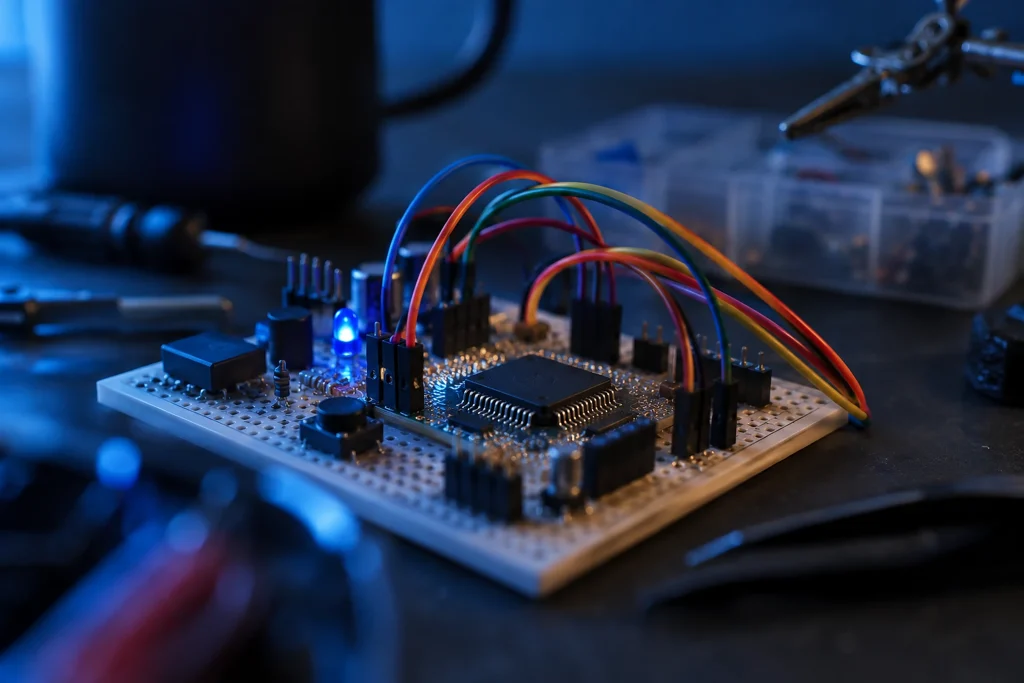
Paulneja ran the Linux 6.11 kernel on the ESP32-S3, which features a dual-core Xtensa Lx7 processor running at 240 MHz. Because it lacks an MMU, a NOMMU configuration and a custom fork() implementation were used. Version 0.8 boots reliably and provides 3.7 MB of available RAM after startup.
Linux uses only one core; the other core is dedicated to the FreeRTOS ESP-IDF stack, which provides WiFi and Bluetooth. The work was carried out on the N16R8 configuration, which includes 16 MB of Flash and 8 MB of octal PSRAM. Paulneja describes the project as being for research purposes.
Why it matters
This work shows what adaptations are needed to run Linux 6.11 on a microcontroller without an MMU and with limited memory, highlighting the practical limits of the NOMMU approach. The custom fork() implementation demonstrates that the standard Linux process model cannot be used directly on this hardware and that software compatibility requires additional work. Dividing the processor cores between Linux and the wireless connectivity stack shows how general-purpose operating system functions and WiFi and Bluetooth support are allocated on the same device. The RAM remaining after startup is the main constraint on the software that can run in this type of setup. The project’s research-oriented nature means that questions about long-term stability, application compatibility, and real-world use cases remain unanswered.
Background
Linux is not a new name in the FikirPilot archive: over the past 90 days, we have published 9 articles mentioning it; the latest was dated September 15, 2026.