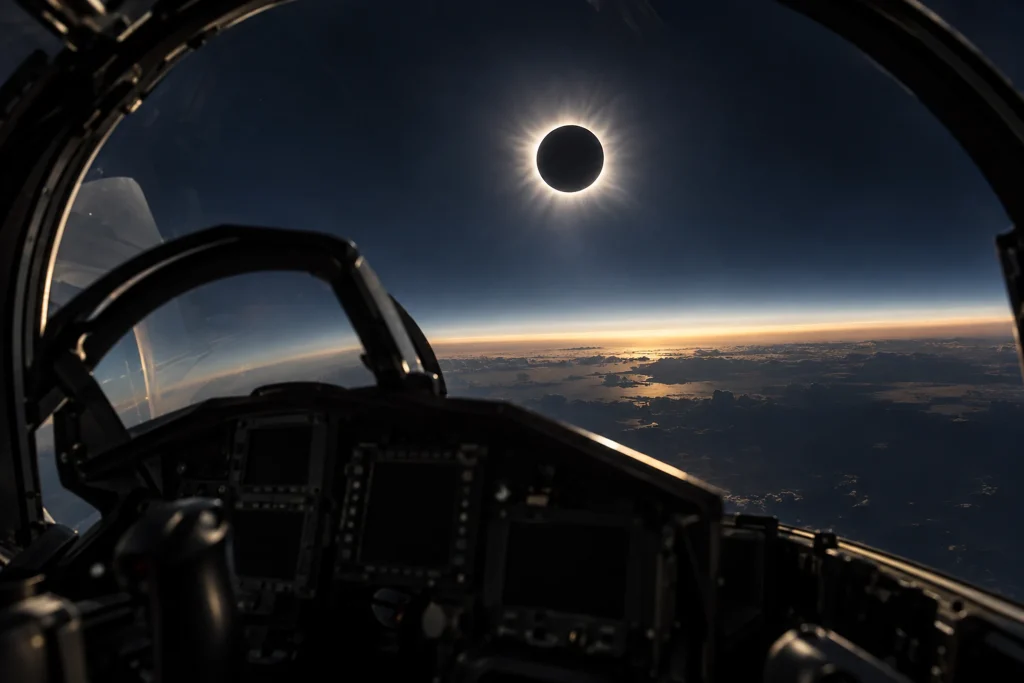
NASA’s APOD image dated September 5, 2026, shows the total solar eclipse recorded on August 12 off the coast of Iceland by the WB-57F high-altitude research aircraft, which was following the Moon’s shadow. The aircraft flew at an altitude of 50,000 feet along the path of totality, extending the time it remained within the Moon’s shadow. High-resolution cameras collected data under conditions unobstructed by clouds, dust and atmospheric water vapor. The image taken from the cockpit shows the solar corona at the beginning of totality. Venus can be seen on the left side of the frame, while Jupiter and Mercury are visible to the right of the eclipsed Sun; the distant horizon remains illuminated outside the shadow. The APOD website is moving to science.nasa.gov/apod.
Why it matters
This observation offers an answer to the question of how atmospheric conditions affect data quality during a total eclipse, using data obtained from high altitude and under more favorable viewing conditions. By following the Moon’s shadow, the aircraft allows the period during which totality can be observed to be studied for longer, while the high-resolution recordings make it possible to assess the corona and the planets in the same frame together. The horizon remaining illuminated outside the shadow makes visible not only the changes around the Sun but also the boundary of the shadow in space. The relocation of the content to the APOD website’s new address creates a practical change that readers seeking access to this scientific image will need to follow.
Background
September is not a new name in the FikirPilot archive: we have published 9 reports mentioning this name in the last 90 days; the latest is dated September 11, 2026.