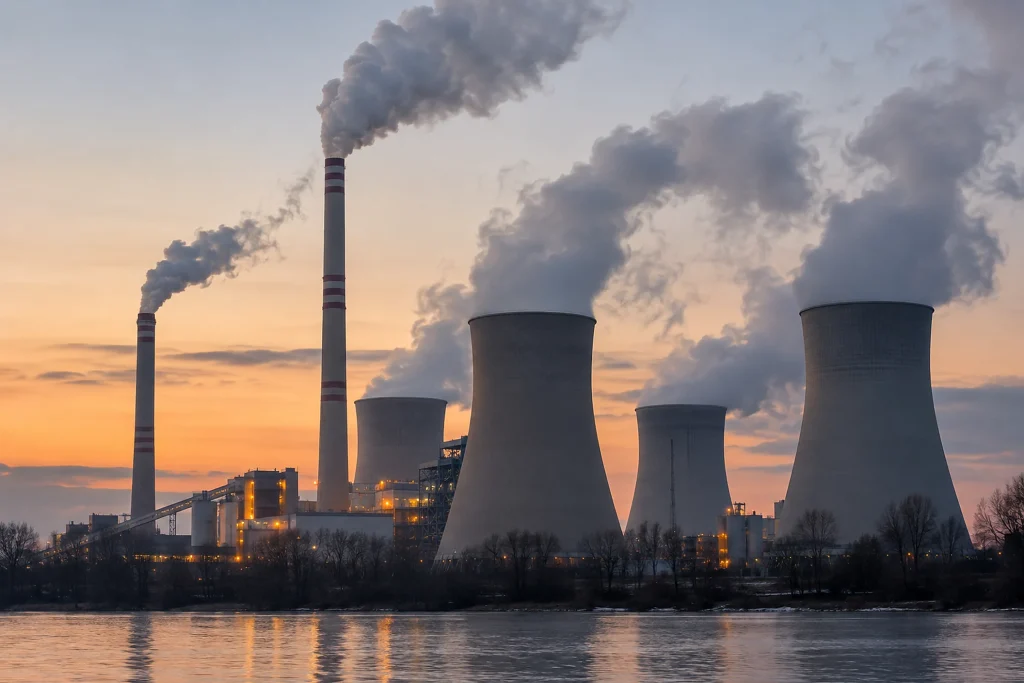
The U.S. Environmental Protection Agency (EPA) announced on Monday its final plan to largely eliminate the 2024 Carbon Pollution Standards regulations. EPA argued that the regulations exceeded its authority under the Clean Air Act and required control technologies that had not been sufficiently proven. The agency also proposed removing all remaining greenhouse gas emissions requirements for power plants, arguing that emissions from these facilities have no significant impact on climate change.
In 2007, the Supreme Court ruled that the Clean Air Act’s definition of an air pollutant also covered greenhouse gases that cause climate change. In 2009, EPA issued its “endangerment finding,” determining that greenhouse gases pose a threat to human health and the environment.
Zealan Hoover, a senior adviser at EPA during the Biden administration, said the Trump administration was seeking to eliminate the legal basis for the regulations by arguing that climate pollution does not harm health or welfare. Maggie Coulter, a senior attorney at the Center for Biological Diversity’s Climate Law Institute, said she expected the administration to issue a “non-endangerment finding” that would remove the obligation to regulate greenhouse gases, arguing that this would contradict established scientific findings.
President Donald Trump described climate change as “the greatest con job ever perpetrated on the world” in a United Nations speech last year. Geoffrey Supran of the University of Miami and Ben Franta of the University of Oxford criticized the administration’s approach, while Franta said the damage caused by heat waves, fires, storms and floods would continue.
EPA revoked the endangerment finding in February, eliminating the basis for its authority to regulate motor vehicle emissions. The agency also moved to revoke the Clean Air Act waivers supporting California’s vehicle emissions standards, but a federal judge temporarily blocked the move.
The Biden-era EPA had said the standards could prevent 1.38 billion metric tons of carbon pollution by 2047. The Trump administration, meanwhile, said the new rule clearing the way for coal and natural gas would save $310 billion in direct compliance costs, while eliminating the remaining power sector standards would save another $370 million. According to an analysis by Resources for the Future, the resulting increase in toxic air pollutants could cause up to $476 billion in health damages. Hoover said the latest rollback had ended climate regulations in the power and transportation sectors, the two largest sources of emissions in the US.
Background
Trump is not a new name in the FikirPilot archive: in the last 90 days, we published 17 stories mentioning him, the latest dated September 15, 2026.
Term: agent
An artificial intelligence agent is software that calls tools and carries out multi-step tasks to achieve a goal rather than producing a single response.