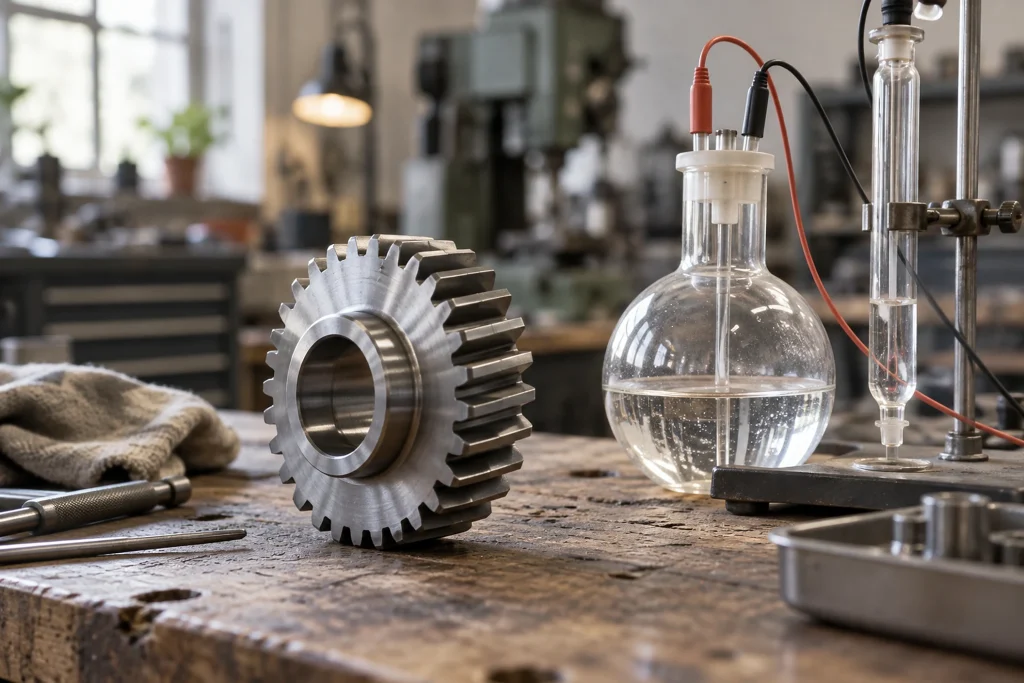
Despite the benefits of steel and iron in the modern world, their tendency to rust is a significant disadvantage. Prevention methods range from paint and alloying to chrome plating and physical vapor deposition. Galvanizing, which is suitable for a home workshop, adds a layer of zinc to the metal; however, it mostly requires a strong acid. This method uses a strong base instead of an acid.
Because the solution is caustic, safety precautions are necessary. Sodium hydroxide is dissolved in distilled water; metallic zinc is dissolved with sugar and liquid soap added to improve the coating. An electric current is applied with a graphite anode and the part as the cathode. The part is coated with zinc and, if necessary, polished with mildly acidic citric acid. The alkaline method may coat parts with deep recesses or irregular shapes more effectively; those requiring acid can produce acid through various methods.
Why it matters
This approach expands the range of methods available to those seeking workshop-scale protection against corrosion beyond strong acids, bringing the use of alkaline chemicals into consideration as well. However, accessibility does not eliminate the safety risks posed by the caustic solution and electric current; the process requires knowledge of chemical and electrical safety. Its potential suitability for irregular or deeply recessed parts means that the method must be evaluated not only according to the material but also according to the geometry of the part. For this reason, the method is of interest to users who weigh the balance between chemical risk and coating requirements. What remains unclear is how much the coating’s durability and the results on different parts may vary; the text does not provide comparative performance information on this point.