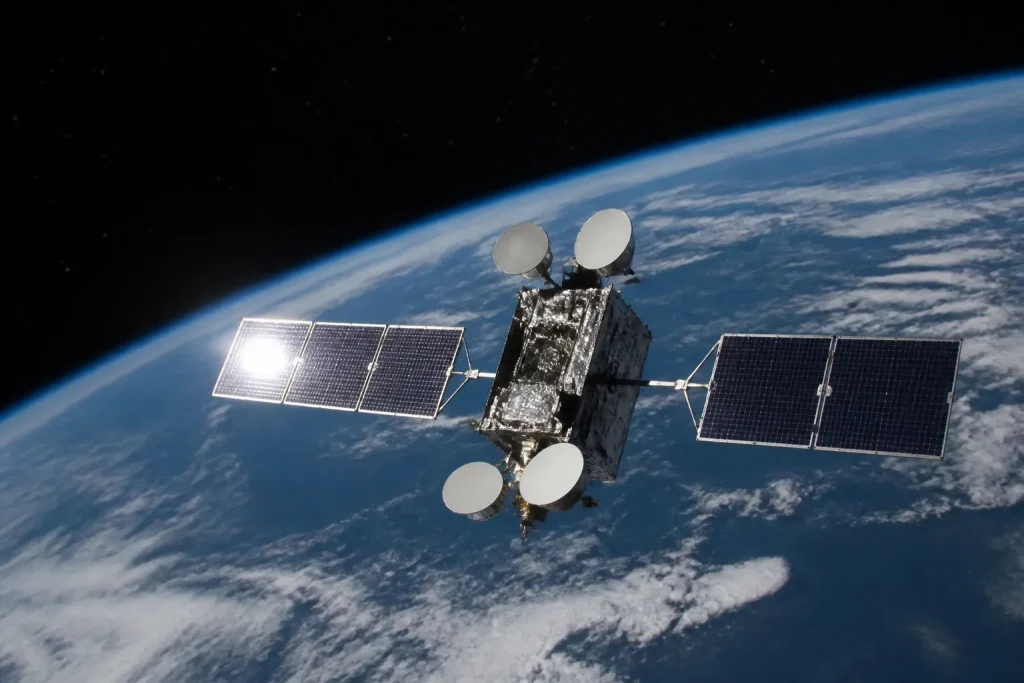
Russia is building a low-Earth orbit satellite internet network called Rassvet as an alternative to SpaceX’s Starlink system. The system, developed by Bureau 1440, is planned to begin service in 2027, with 292 satellites, including spares, to be placed into orbit by 2030. It is stated that the fleet’s capacity could be increased to 924 satellites depending on demand.
The project’s total financing is expected to reach approximately 432 billion rubles. Approximately 103 billion rubles of this is planned to come from the federal budget, while 329 billion rubles will be covered by the company’s own funds. Rassvet is intended to serve areas where terrestrial infrastructure is limited, such as Siberia, Russia’s Far Eastern regions and areas around the Arctic.
The system aims to provide user terminals with speeds of up to 1 gigabit per second and latency of up to 70 milliseconds through satellites at an altitude of approximately 800 kilometers. It will serve individual users as well as mobile operators, transportation companies and industrial facilities; it could also be used on trains and aircraft. Under an agreement with MegaFon, base stations in areas with inadequate connectivity are planned to be connected to the internet via Rassvet.
Why it matters
Rassvet could diversify internet access in regions where terrestrial infrastructure remains limited, not only for individual users but also for mobile communications and transport infrastructure. Supporting base stations with satellite connectivity is important for service continuity, particularly in areas where connectivity is inadequate. Bringing trains, aircraft and industrial facilities within the coverage area shows that the project is targeting corporate and operational use beyond consumer internet. However, the open question is not only whether the planned service launch and satellite fleet targets will be achieved, but also to what extent the stated speed and latency values will be delivered to different user groups. The sharing of financing between public and corporate resources also raises the question of how the project’s economic burden will be distributed.