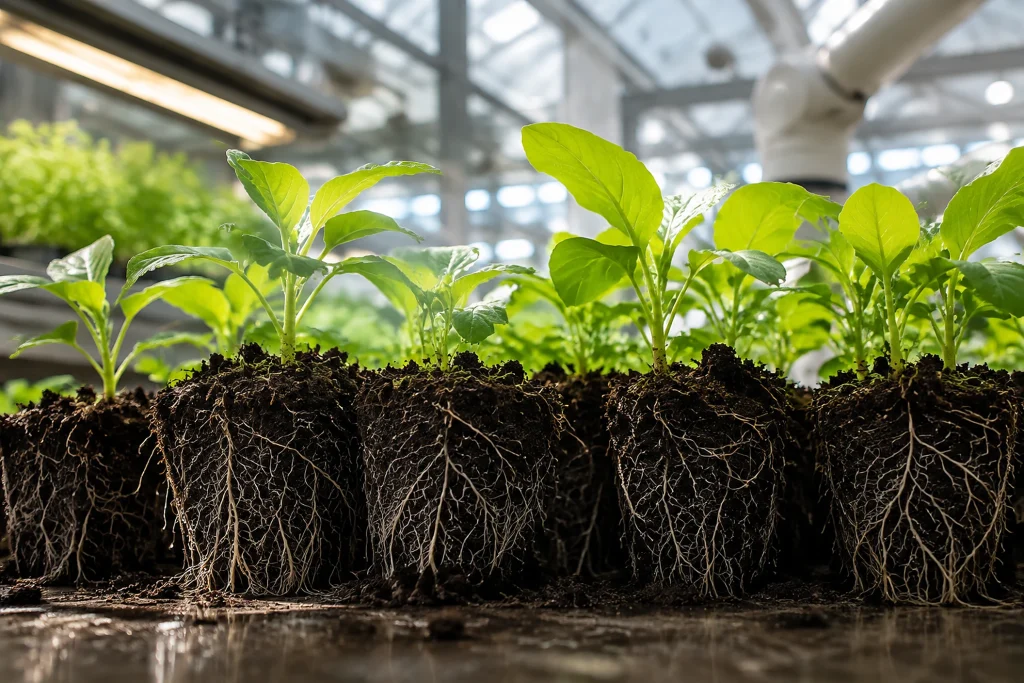
Although fertilizer is critically important for the global food supply, its production consumes large amounts of energy and causes emissions. Research shows that placing beneficial microbes around plant roots could provide plants with the nitrogen they need to grow. This method could reduce the need for chemical fertilizer, whose production is responsible for approximately 2% of global greenhouse gas emissions, as well as farmers’ costs. The Iran war has also driven up energy and fertilizer prices in recent months.
People have used manure as a biological fertilizer for thousands of years, while companies are developing microbial fertilizers, including ones based on genetic engineering. However, it is difficult for microbes to reliably provide plants with nitrogen while sustaining themselves. Although nitrogen makes up approximately 80% of the air, plants cannot use it directly; microbes convert nitrogen into compounds such as ammonia. In synthetic fertilizer production, this process is carried out industrially using the natural-gas-based Haber-Bosch process.
Switch Bioworks is working on a genetic switch that enables microbes to first multiply around roots and then produce nitrogen. In the company’s leading approach, the microbes will begin producing ammonia when nitrogen levels in the soil fall below a certain threshold.
The Switch product is currently being tested in six US states. The company is initially focusing on corn, which was planted on more than 90 million acres in the US in 2026, and is two to three years away from a commercial product. How effective it is in the field is not yet known.
Why it matters
This approach calls into question the dependence on energy-intensive industrial processes and externally applied chemical inputs to meet plants’ nitrogen needs. For this reason, the development is being closely watched both by farmers facing rising fertilizer costs and by environmental policies seeking to reduce emissions from agricultural production. However, it is not yet clear to what extent microbial fertilizer will work consistently beyond laboratory or controlled conditions. In particular, whether the balance between microbes’ survival around roots and nitrogen production can be maintained under different soil and climate conditions remains an open question. The trials in six states aim to show whether this uncertainty can be resolved before the technology moves closer to commercial use.