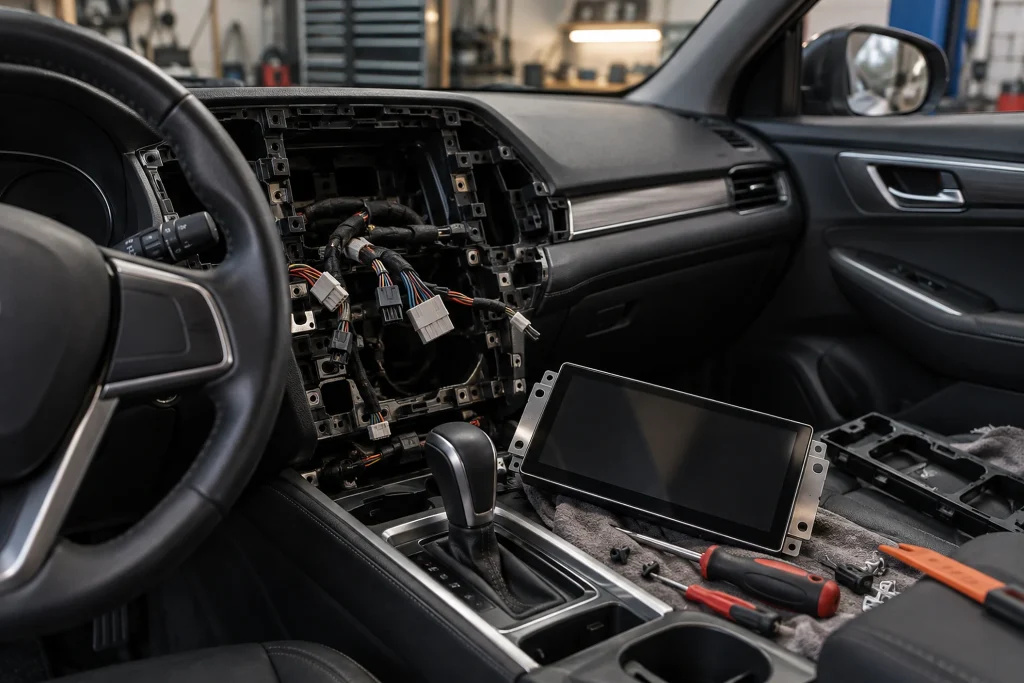
Claiming not to be a “car guy,” [Arkandas] made modifications to various cars over the years; his latest adventure was changing the iDrive system in a BMW Mini F56. Wanting to upgrade the system because of its small screen and impractical interface, [Arkandas] bought a €700 device from a Chinese seller after researching its compatibility with the CAN connections. An incorrectly connected connector caused a short circuit; although the issue was resolved, the loose screen fell and broke during a test drive. While reverse-engineering the system for an unprogrammed replacement screen, he was offered a completely new unit in exchange for sending back the old device. The process took months because of the long wait and inadequate after-sales support.
Why it matters
This experience shows that changing a car’s infotainment system does not end with buying a device that appears suitable. For Mini F56 owners, the real issues are the safety of the installation, access to replacement parts, and the ability to transfer the software to the device, as well as the aftermarket unit’s compatibility with the car’s connections; when any one of these fails, the process can result in both damage and a long wait. The process also reveals that the product price and technical curiosity do not provide the same level of assurance as the seller’s support when problems arise. This creates uncertainty that directly affects the purchasing decision for users expecting a ready-made solution. The open question is to what extent the device’s compatibility with the car and the resolution process in the event of potential malfunctions can be verified before purchase in a similar modification.
Background
Mini is not a new name in the FikirPilot archive: we have published 3 stories mentioning this name in the past 90 days; the most recent is dated September 9, 2026.