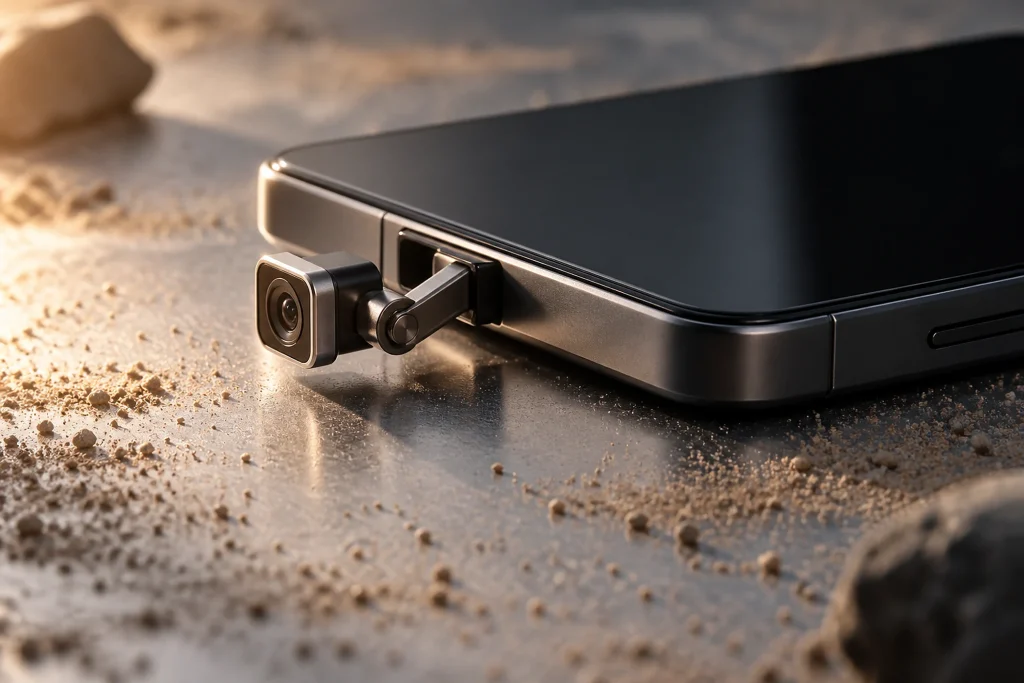
Honor’s Robot Phone, launched in China in August, underwent durability testing and was disassembled by Zack Nelson on the JerryRigEverything YouTube channel. On the Mohs scale, the glass developed scratches at level six and deeper marks at level seven; the results were similar to those of many smartphones. Despite significant force applied from the front and back, the device, which has an aluminum frame, did not bend permanently. The complex structure of the gimbal camera system, attached to a mechanical arm that can move to different angles and distinguishes the phone from standard models, was also examined. However, after heavy exposure to dust and sand, the arm could not emerge from its housing; the mechanism was found not to be completely dustproof.
Why it matters
The results show that the Robot Phone does not differ significantly from conventional smartphones in terms of basic body and screen durability, with its main vulnerability concentrated in the moving camera assembly. This distinction indicates that the mechanism setting the device apart from standard models also creates an additional point of contact that could lead to a loss of functionality in dusty and sandy environments. The findings therefore suggest that body durability alone is not a sufficient criterion, particularly for people who will use the phone in such conditions. Although the teardown highlights the complexity of the gimbal system, it remains unclear to what extent the intensive dust test represents wear in everyday use. The current findings also do not establish whether the mechanism’s response to dust is temporary or permanent.
Background
Honor is not a new name in the FikirPilot archive: over the past 90 days, we published 12 news reports mentioning the name, the latest dated September 15, 2026.