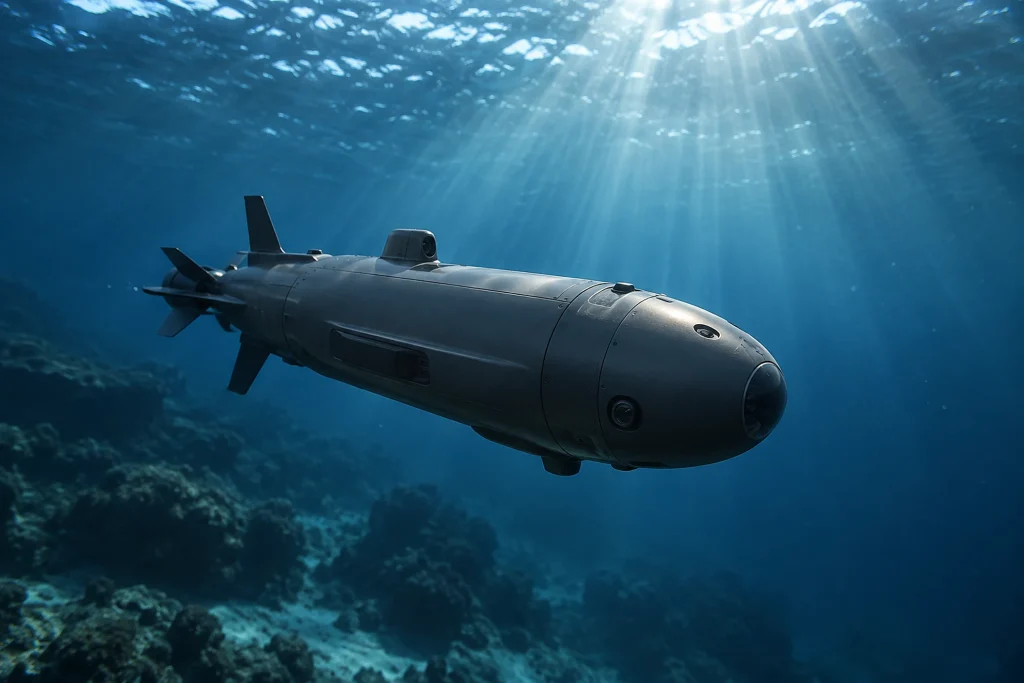
The 204-meter vessel, which has been under construction at the Hudong Zhonghua shipyard in Shanghai since April, appears to be a warship, but images from The War Zone and H. I. Sutton’s analysis point to a different role. A platform approximately 50 meters long at the stern is moved by 12 vertical arms; the enclosed hangar appears suitable for carrying, deploying and maintaining approximately four large unmanned underwater vehicles. The 35- and 45-meter prototypes China tested in Hainan support this assessment. The navy has not disclosed the vessel’s mission; however, the design indicates a shift from a ship-centered structure to a network made up of unmanned aerial, surface and underwater vehicles. The mothership could reduce range and logistics problems by carrying the vehicles to the area of operations.
- The United States’ Orca conducted a transit exceeding 1,000 nautical miles in the eastern Pacific in July.
- Australia signed a contract worth 1.7 billion Australian dollars over five years for Ghost Shark in September 2025.
- China’s Sichuan vessel has been at sea since November 2025.
According to US intelligence, China’s shipbuilding capacity is approximately 232 times greater. In the Black Sea, Ukraine’s unmanned vehicles, the sinking of Moskva and the Russian fleet’s losses showed that low-cost systems threaten large ships.
Why it matters
The development makes it more difficult to measure naval power solely by the number of large platforms carrying weapons directly; the combined use of a carrier ship and different types of unmanned vehicles also brings access to the area of operations and resupply planning back into focus. For this reason, the issue is important not only for navies, but also for countries developing unmanned systems and actors planning defenses against these systems. When evaluated alongside the experience in the Black Sea, it becomes clear that lower-cost vehicles could increase the pressure on large platforms. However, it has not yet been clarified which missions the Chinese navy will use the ship for, the actual capabilities of the vehicles it will carry, or how this structure will integrate with air, surface and underwater assets.