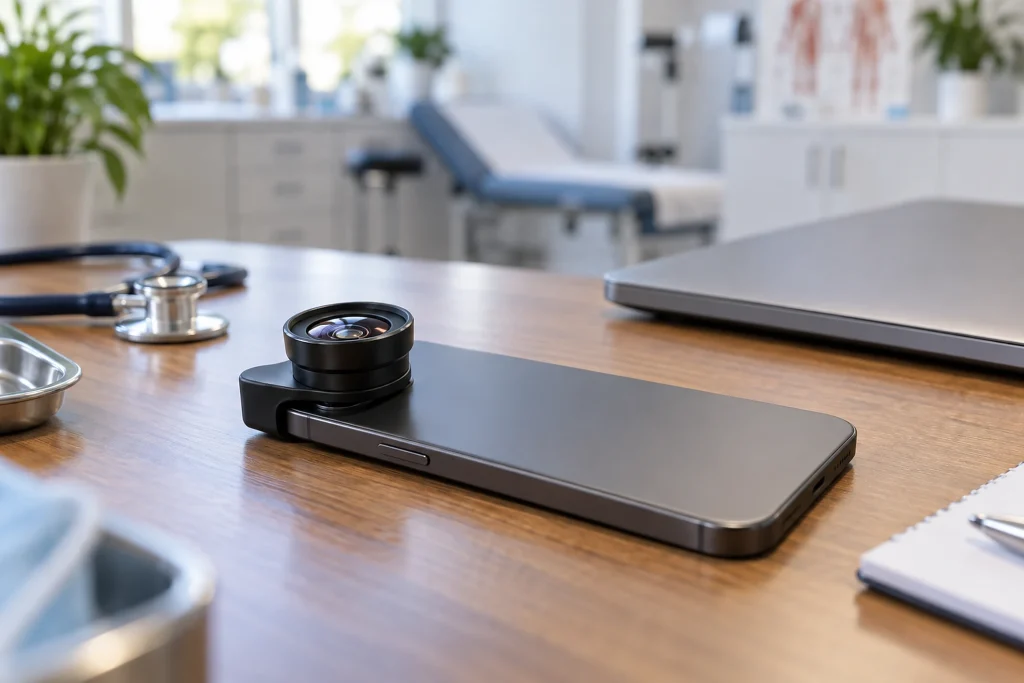
Researchers in India aim to enable remote screening for cataracts and problems in the anterior segment of the eye using a low-cost optical attachment fitted to an Android phone. The system allows community health workers to capture standardized images and send them to ophthalmologists. Based on the images, specialists can decide whether the patient should be referred for a detailed examination or treatment. The study by Dr. Prabhu Krishna Ravilla of Aravind Eye Hospital and his team was presented at the 44th Congress of the European Society of Cataract and Refractive Surgeons.
Why it matters
This approach offers a service model in which community health workers can conduct the initial assessment without requiring an eye specialist to be in the same location as the patient. The transmission of standardized images could help specialists remotely identify cases requiring a detailed examination and arrange the referral process accordingly. The use of an Android phone and a low-cost attachment aims to keep the equipment needed to implement the system accessible. In this respect, the study is relevant to healthcare institutions and workers interested in how remote screening could be integrated into eye care services. However, because test results, validation data and the system’s classification accuracy have not been disclosed, the method’s clinical reliability and suitability for widespread use cannot yet be assessed.
Background
Android is not a new name in the FikirPilot archive: over the past 90 days, we have published 10 news stories mentioning the name, the latest dated September 12, 2026.