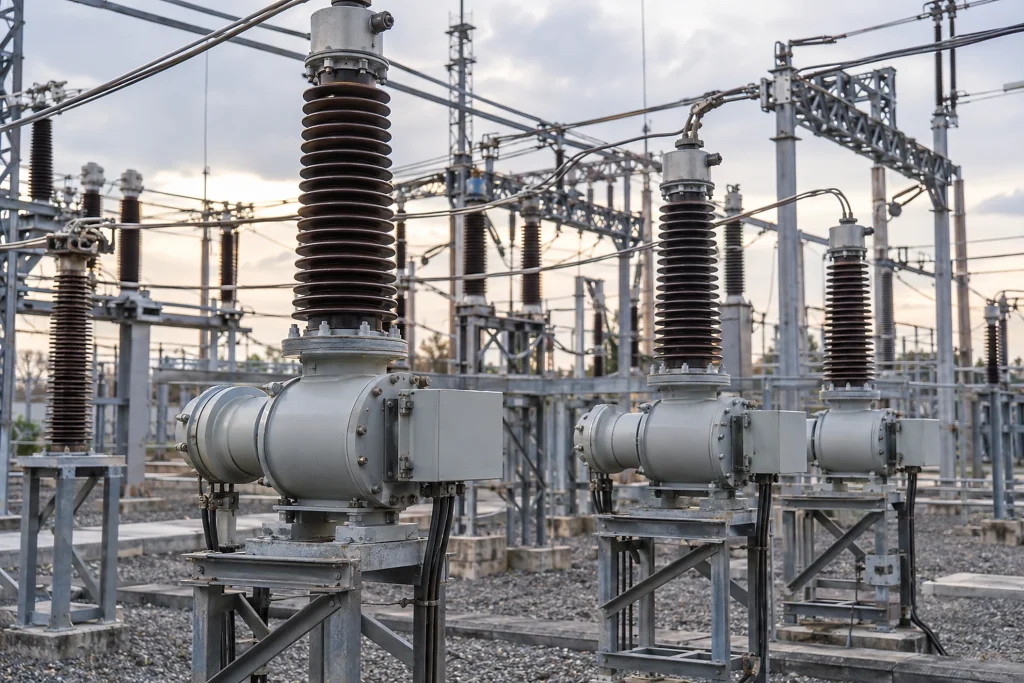
Safe monitoring of voltage and current in national power grids poses an engineering challenge because of the extremely high values involved. [Jordan Taylor], known as [The Electric Brit], explains how grid-scale current transformers (CT) and equipment providing galvanic isolation work. At currents of 5 kA and above, safety distances become critical. CTs support overcurrent, overvoltage and differential protection; leaks, short circuits and illegal electricity use can be detected. Faults can trigger circuit breakers. Although core saturation makes measurements more difficult, CTs ensure that the AC grid can respond to changes and maintain its reliability.
Why it matters
This topic shows that grid safety depends not only on the speed of circuit breakers but also on a measurement chain capable of accurately detecting faults. At high current levels, electrically isolating measurement devices from the grid becomes a fundamental design issue, both for safety and for the operation of protection systems. For this reason, the system described helps those particularly interested in grid operation and protection engineering understand how conditions such as leaks or short circuits are made visible. However, core saturation leaves open the question of how reliably measurements can remain under difficult conditions; this also brings the limits of the data underpinning protection decisions into focus.
Term: grid
An electrical grid is the transmission and distribution network that connects generation facilities to consumers; supply and demand must be balanced instantaneously.