Dutch WaveSave calendar
Against the flood risk growing with global warming, Dutch WaveSave offers a portable dam that can be set up quickly. Worldwide, one in five people is at serious risk of flooding; according to one estimate, with climate change and population growth, approximately 2 billion people will be exposed to floods by 2100 — an increase of 300 million compared to 2020.
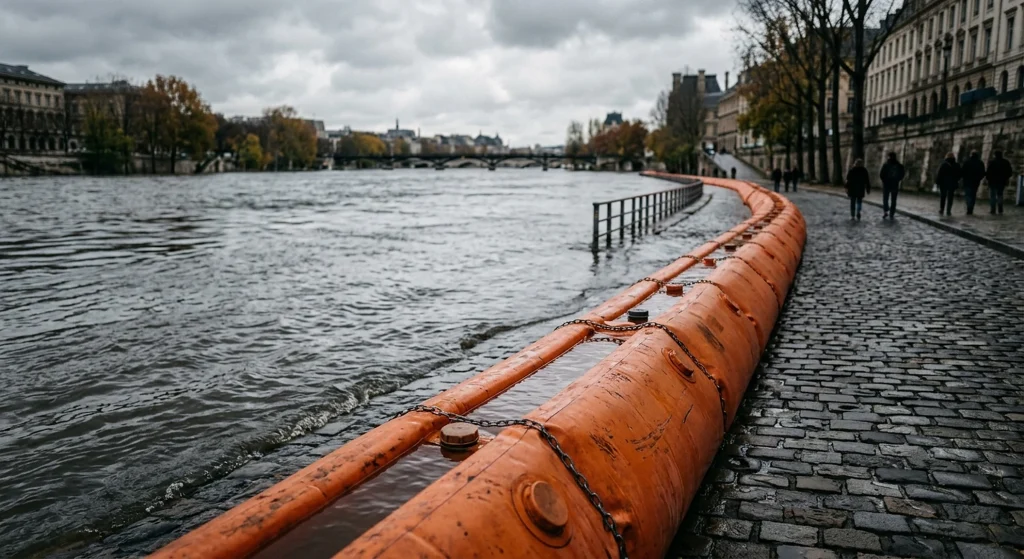
WaveSave’s rubber dam, called SlamDam, is set up in the first hours of a flood: anyone can unroll it along a riverbank or seashore and fill it with water; it rises up to 1.3 meters, protecting the surrounding structures.
Netherlands timeline
Developed in the Netherlands in 2013 and still used by the country’s regional water authorities, the product has spread to Africa and Southeast Asia and has been deployed in at least a dozen countries.
- Year founded: 2017
- Headquarters: Eindhoven, Netherlands
- Notable development: Presenting SlamDam on Governors Island in New York as one of the seven winning teams of an urban climate adaptation competition.
The dam protects critical facilities such as hospitals and water treatment plants, as well as agricultural land, and is cheaper in the short term than permanent solutions such as levee construction.
Burundi figures
It can be filled with any portable pump and, with a lifespan exceeding 40 years, can be used again and again. The water inside can also be put to use for irrigation during dry periods after a flood: according to a UN report, farmers who had access to the water from a dam installed in Burundi’s rural Mpanda region during the 2022 flood season doubled their income that year.
NOAQ Flood measurements
Competitors such as AquaFence, MegaSecur and NOAQ Flood Protection also manufacture mobile flood barriers; WaveSave sets itself apart by focusing on rapid emergency deployment and water storage capability in developing countries. A study in Kenya points to adoption issues such as ownership of the barrier and upfront costs. The product, whose five-meter section sells for between 1,000 and 3,000 euros, is offered in different height options.