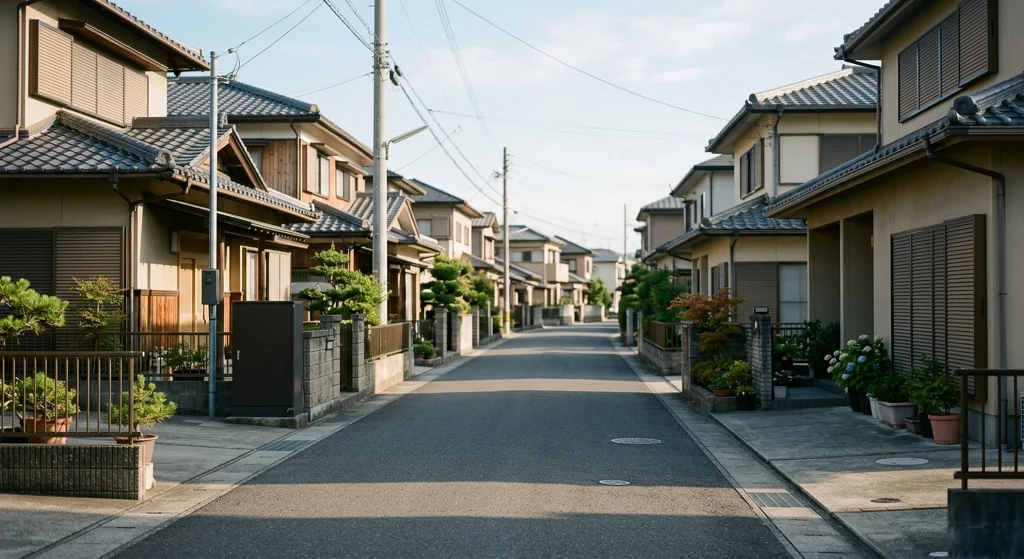
The city of Toyama in Japan, where birth rates have fallen to record lows, is accused of altering census data. After the Ministry of Internal Affairs and Communications filed a criminal complaint over inconsistencies on September 29, police raided the municipal building on October 3. According to The New York Times, there is a discrepancy of roughly 3 thousand people between the preliminary results in May and the final count; it is alleged that vacant households were included in the count to inflate the population. Since the government allocates funds to municipalities based on population, the city may have received 60 million yen (approximately 18.6 million TL) in excess grants, reports say. The Japan Times reported that the preliminary results were used for the 2026 grants. Mayor Hirohisa Fujii apologized and pledged full cooperation. Toyama, a city of roughly 400 thousand people, had been held up by the World Bank as an example of the “compact city” model. According to Professor Nobuo Sasaki, officials may have resorted to irregularities in order to preserve that reputation and avoid appearing to fall behind Kanazawa and Niigata.
Why it matters
In Japan, the funds the central government allocates to municipalities are based on population data, so the accuracy of census figures directly determines how public resources are distributed; this leaves local statistics exposed to financial incentive pressure. In a country where birth rates are at record lows, acknowledging population loss means both a loss of budget and of prestige, and cities therefore appear to be under structural pressure to inflate their data. Given the compact city model held up as an example by the World Bank, the allegations shake not only a case of local irregularity but also an internationally referenced urbanization narrative. The use of preliminary results for the 2026 grants leaves open the question of how the potential overpayment created by the gap with the final count will be recovered. The investigation also raises the question of how oversight will be ensured in population-based resource allocation.
Term: patch
A patch is an update that fixes a bug or a security vulnerability in software.