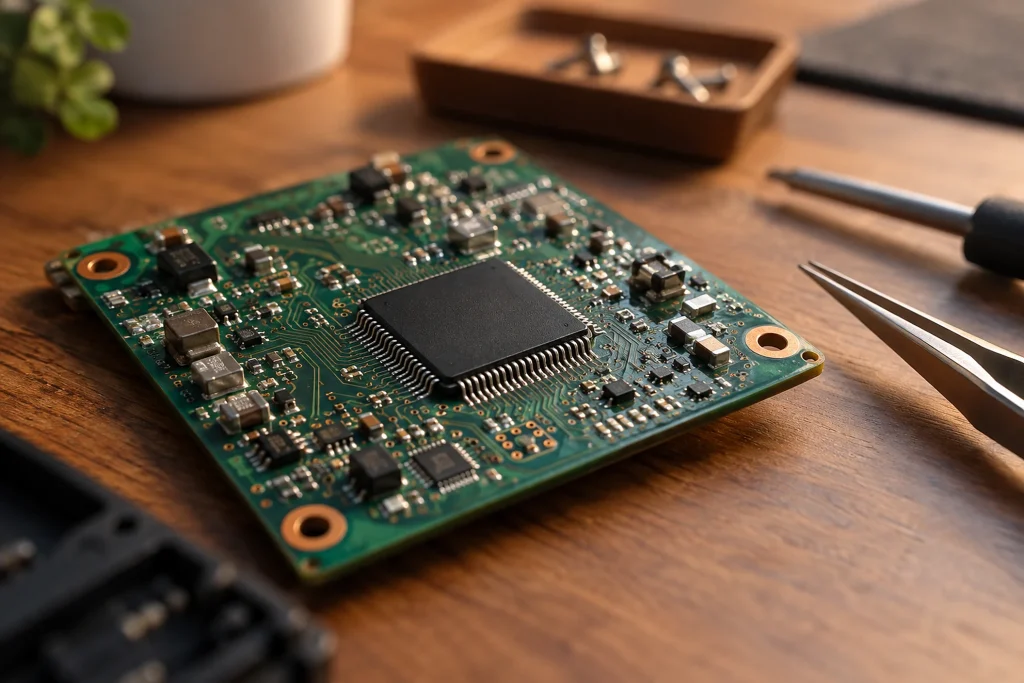
“Bare metal” refers to software running directly on hardware without an operating system or abstraction layer. While this method provides direct access to peripherals and memory, it requires giving up the protections and auxiliary features offered by operating systems.
At Hackaday Europe 2026, Sylvain Huet outlined his goal of making bare-metal development easier. According to Huet, the way to achieve this is not merely to avoid operating systems and growing dependencies, but to build a transparent platform from scratch by changing the approach to software development.
Huet’s computing journey began in 1982 with the Thomson TO7, which had 8 kilobytes of user RAM and a 6809 CPU. The simplicity of the hardware made it possible to understand the entire system and work directly in assembly. Huet later worked on the Metaverse-like Second World project and, in the early 2000s, on Nabaztag, a Wi-Fi-connected rabbit.
These projects used a bare-metal approach to improve performance and work closely with peripherals. Huet illustrated today’s complexity with Windows-based flight information displays at airports during the 2024 CrowdStrike outage. He showed that the same display could be built using a Raspberry Pi running a bare-metal program without an operating system. This can reduce the risk of failures caused by externally imposed security updates and unnoticed dependencies.
Huet’s Minimacy project aims to provide transparency by eliminating black boxes such as operating systems. The “new minimalism” approach argues that a single developer should be able to understand a project from start to finish. Huet also describes the increased reliance on external libraries and black boxes for complex tasks as the “low-level paradox.”
Why it matters
This approach raises the question of how much of the software stack is truly necessary, particularly for those developing single-purpose displays and systems that operate close to peripherals. Removing the operating system and external libraries reduces failures caused by updates and hidden dependencies, while placing responsibility for safeguards and ready-made utilities directly on the developer. Minimacy’s goal of creating a structure that a single developer can understand in its entirety highlights the tension between auditability and ease of development in modern software. Huet’s projects from different periods show that the bare-metal approach is not limited to old computers, but is also being discussed in current use cases requiring performance and hardware access. The key unresolved issue is whether the gains in transparency and independence offset the cost of foregoing external libraries for complex tasks.
Background
Europe is not a new name in the FikirPilot archive: over the past 90 days, we have published 8 news stories mentioning this name; the most recent is dated September 14, 2026.