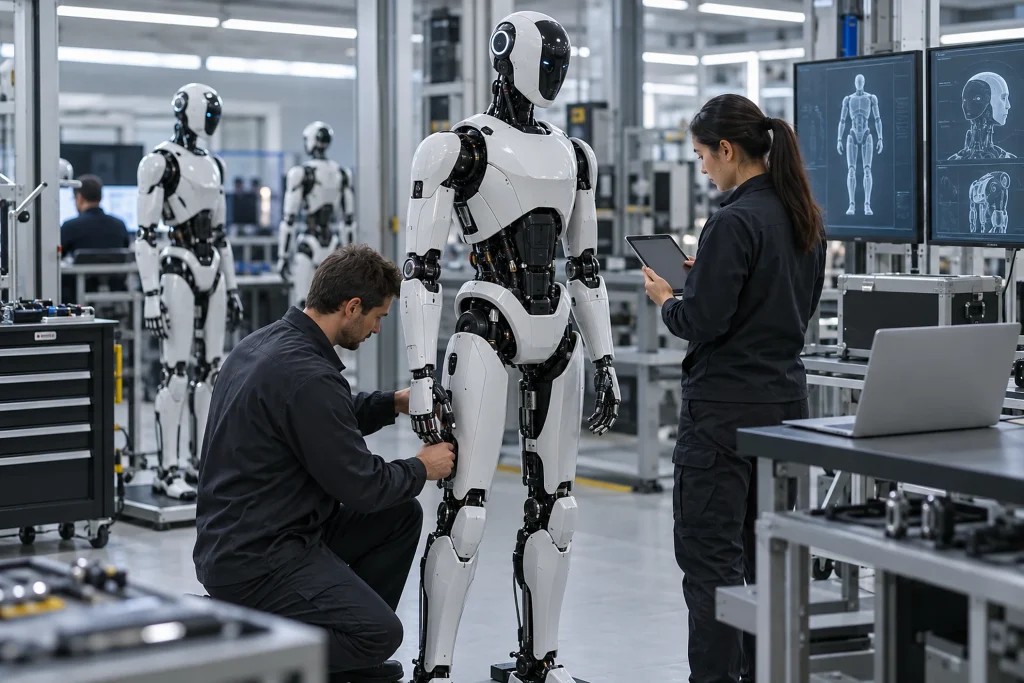
Approximately 30 robots gathered at a protest in Warsaw to spark discussion about AI and the impact of robots on the workforce, and to demonstrate the capabilities of modern humanoid robots; the robots were reportedly directed to gather by the event organizers. The demonstration was considered ironic because it showcased the robots taking over the protesters’ “jobs.”
A company in Japan has launched a robot ambulance service aimed at repairing malfunctioning robots on site. In the case of more serious malfunctions, the robots can be taken to a facility; a backup robot can also be transported to take over the patient’s job during the repair.
WIRED’s Boone Ashworth tested an AI-assisted repair service at John Deere’s corporate headquarters on a tractor worth approximately $120,000 USD. Following the software’s instructions, Ashworth identified a disconnected sensor and fixed the error message by reconnecting it. The demonstration, applauded by Deere representatives, was criticized over the subscription service, which starts at $195 per year for each machine, and was met with laughter from critics of Deere’s repairability record. It was emphasized that a sensor coming loose during harvest was not one of the most serious problems that could be encountered. Deere says the service is used by only approximately thousand users per day.
Finally, in Terence Eden’s “Collection of Imaginary Software,” fake disk labels for fictional software are prepared, attached to old 3.5-inch floppy disks, and framed. The work references the hacker and maker community, inspired by technology enthusiasts in productions such as WarGames.
Why it matters
These examples show that robots are positioned not only as machines used in production, but also as part of labor and maintenance processes. The display of robots taking over people’s jobs as a form of protest reveals that their relationship with human labor remains controversial, beyond automation’s technical capacity. The ambulance model that responds to breakdowns and Deere’s software raise the possibility of carrying out maintenance where the machine is located and with digital guidance, while the cost and scope of access to these services remain open questions. Limited use and subscription conditions suggest that ease of repair will be measured not only by technical success but also by users’ ability to access the service. Alongside this transformation, the collection of imaginary software prepared on floppy disks adds a historical layer by showing how technology culture preserves old tools and fictional worlds.
Background
Hackaday is not a new name in the FikirPilot archive: we have published 3 news reports mentioning the name in the last 90 days; the most recent is dated August 28, 2026.